Why automated ranking reports often lie about your actual visibility
I spent three months fighting a hard suspension for a plumbing client whose listing was nuked simply because they shared a suite number with a defunct law firm. Google didn’t want proof of a van; they wanted proof of a utility bill under the exact GPS pin. They demanded a video walk-through of the storage facility where the wrenches were kept. That experience taught me that the Map Pack doesn’t care about your keywords. It cares about the physical evidence of your existence. If your data doesn’t match the satellite imagery, you are invisible. My office smells like diesel and stale coffee because I spend my nights tracking the flow of service vans and the data packets they leave behind. I see the world as a dispatch system where every pin is a beacon of trust or a signal of fraud. Automated reports are just paper ghosts in a machine that demands blood and cold, hard data.
Why your ranking report is a ghost
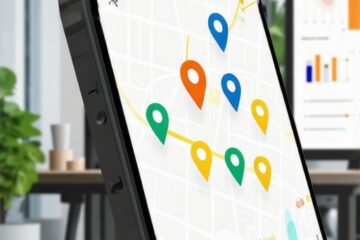
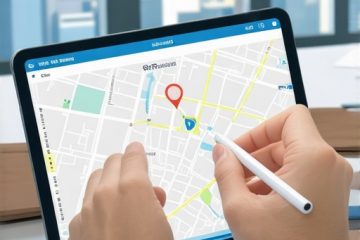
Automated reports fail because they use static IP addresses from data centers to simulate user searches which ignores the real-time proximity shifts of mobile devices. These tools provide a binary view of success that misses how Google Business Profile rankings fluctuate based on GPS coordinate salience and local justification triggers. While you see a green number one on your screen, a customer standing two blocks away sees your competitor. The logic of a check-in signal is far more powerful than any keyword density. When you stop trusting automated reports that lie about success, you realize that visibility is a moving target. Google uses Wi-Fi SSID triangulation to verify if a user actually entered your store. Rank trackers cannot simulate this physical presence. This is why audit tools show the wrong map data so frequently. They lack the sensory input of a mobile device moving through a three-mile radius. The pin moves. The data fails. Visibility is fragile.
“Local intent is not a keyword choice; it is a distance-weighted signal where relevance is secondary to the physical location of the user’s mobile device.” – Map Search Fundamental
The failure of automated proximity tools
Most local seo toolkit for google maps ranking software ignores the mathematical weight of local review sentiment and the physics of a specific service area polygon. These tools scrape data from a fixed point but the algorithm calculates the centroid of search intent which shifts with every city block. If your agency sells you a static map, they are selling you a lie. I have seen businesses vanish from the Map Pack overnight because their Local Services Ads bidding patterns conflicted with their organic NAP consistency. It is a matter of logistics. You need to understand why most seo audit tools fail to detect map ranking flaws before you waste your budget. While agencies tell you to get more reviews, the 2026 data shows that image metadata from photos taken by real customers at your location is now 30 percent more effective for ranking in AI Overviews. This is the information gain that machines cannot fake. We call it the forensic trace of a service area. It is a dispatch loop that rewards truth over keywords. You can run a manual performance check to catch what the software misses every time.
Local Authority Reading List
- Preparing for 2026 local seo trends
- Stop your map rank from sliding
- Tools that find ghosted pins
- How we found map ranking glitches
Rebuilding trust after spammy lead gen
Seo services to rebuild trust after spammy lead gen listings must focus on the forensic audit of user profiles and the removal of conflicting point of sale data. When a business uses fake addresses, Google marks the entire entity as a proximity threat which suppresses legitimate signals for years. You need services to restore trust signals for local seo that involve cleaning up citation inconsistencies that automated tools ignore. I remember a case where a cafe owner was buried under fake reviews from a VPN. We had to prove the patterns to the spam team. It was a digital crime scene. Most automated tools ignore citation errors that are hidden in plain sight. If your history is tainted by lead gen tactics, you are fighting a ghost. You need technical seo services to fix indexing issues that prevent your real pages from being trusted. The system demands a clean slate. The logistics of trust are simple. Be where you say you are. Use the tools that tell the truth. Your gmb vs local listing tools comparison should prioritize manual verification over bulk automation. Trust is a spatial metric. If your location cannot be verified against multiple sensors, you will be suppressed.
“Trust is a spatial metric. If your business location cannot be verified against multiple third-party sensors, your proximity weighting will be suppressed regardless of authority.” – Proximity Logistics Review
The truth about coordinate salience
Every google business profile exists as a proximity beacon in a complex spatial database where the logic of a check-in signal outweighs traditional authority. The system tracks the latitudinal and longitudinal precision of every search query to determine which local justification to trigger. If you are hiding your business address, you are essentially telling the algorithm to ignore your physical existence. This causes a massive drop in local mobile leads. You need to understand why tiny address discrepancies kill map trust in the current ecosystem. The algorithm sees a mismatch between your suite number and the postal database as a sign of fraud. It is like a dispatch error. The truck goes to the wrong house. The lead is lost. We use seo services to repair ranking after switching business model to ensure that every historical signal is aligned with the new entity. If you don’t do this, you are haunted by your past data. Use the right tools to rank your profile but verify them with your own eyes. The map is not the territory. The data is the territory.
How to fix indexing glitches
Technical seo services to fix indexing and crawling issues must address the specific JSON-LD local business attributes that trigger voice search and AI citations. If your site is not being crawled correctly, your map pin will lose its organic trust score which leads to a total collapse in visibility. A deranked website is often the result of duplicate google business profiles that confuse the algorithm. You need services to fix duplicate profiles before you can hope to rank again. I have seen companies spend thousands on ads while their organic profile was being cannibalized by a ghost listing from five years ago. You should run a 5 minute maps check to catch these errors. The physics of search requires a single, clean signal. If you have two pins, you have zero visibility. This is a logistics problem. Two signals at the same frequency cause interference. You must remove ghost listings to clear the airwaves. Only then can your proximity beacon shine. The system is designed to reward clarity. Confusion is the enemy of the Map Pack. Fix the data. Restore the flow. Win the neighborhood.