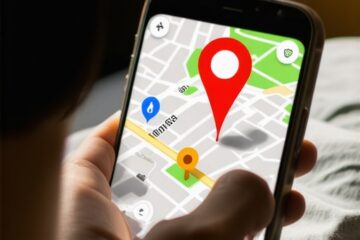
I smell the wet concrete before I even step out of the car. It is a gray Tuesday in Chicago. I am standing in front of a brick building that supposedly houses a plumbing business. On my phone, the map pin is a ghost. It does not exist. This is the reality of the street. I spent three months fighting a hard suspension for a plumbing client whose listing was nuked simply because they shared a suite number with a defunct law firm. Google did not want proof of a van. They wanted proof of a utility bill under the exact GPS pin. They wanted to see the physical entrance where the data said it should be. When the digital coordinates do not match the physical reality, the algorithm kills the visibility. The pin died. The phone stopped ringing. I had to forensic the entire profile to prove that the business existed in three-dimensional space.
The ghost in the GPS coordinates
Mobile map pins vanish because of coordinate rounding errors, mismatched primary categories, and latent API synchronization delays. Google prioritizes devices with high GPS accuracy. If your business coordinates are even slightly offset from your physical storefront entrance, mobile users will see a ghosted pin or zero visibility in high-density areas.
The math of a map pin is brutal. We are talking about decimal degrees. If your longitude and latitude are rounded to the fourth decimal place instead of the sixth, you might be thirty feet off. In a city, thirty feet is a different building. It is a different entity. Most business owners ignore this. They trust the pin drop. I see the glitch. I see the misalignment between the street view data and the coordinate data. This is why your map pin is ghosted while your competitors appear on every screen. The mobile algorithm is sensitive to the user’s current location. It calculates a proximity radius in milliseconds. If your technical data is fuzzy, the system skips you for a more precise signal.
This precision is a fundamental requirement. You need to understand how the map engine interprets a physical space. It is not just about the address. It is about the centroid of the building. When a user is walking down the street, their phone is constantly pinging towers and Wi-Fi nodes. Google matches that ping against its database of verified locations. If your map pin is falling behind competitors, it often means your location data has lost its physical salience. The trust is gone. The system views your business as a digital artifact rather than a physical destination.
“Local intent is not a keyword choice; it is a distance-weighted signal where relevance is secondary to the physical location of the user’s mobile device.” – Map Search Fundamental
Why your physical address is a liability
Address discrepancies and suite number overlaps trigger immediate trust score reductions in the local search engine. When multiple businesses claim the same microscopic GPS location, the algorithm filters the most authoritative entity and suppresses the rest. This creates a situation where your physical location becomes a barrier to ranking.
I have seen businesses disappear because they added a comma where there should have been a period. I have seen them vanish because they used the word ‘Suite’ while their tax documents said ‘Unit’. The street knows the truth. The database does not. The database wants perfection. If you are struggling with tiny address discrepancies, you are fighting a losing battle against an automated filter. The algorithm views these errors as signs of potential map spam. It would rather hide a legitimate business than show a fake one.
This is especially true for service businesses. If you moved and didn’t update your primary verification tier, the system still thinks you are at the old spot. The mismatch between your new GPS signal and your old profile data creates a trust gap. Many owners look for seo services to fix gmb ranking loss after address change, but the fix is often deep in the technical layer of the profile. You cannot just change the text. You have to reset the trust signals. You have to prove the new location is a verified beacon of service. The street photographer sees the new sign. The algorithm needs to see the new data trail.
The local authority reading list
- The invisible glitch in your business profile killing local mobile leads
- Why your seo audit tools are showing the wrong map data
- Fixing the schema errors that kill your google business profile impressions
- The 5 minute maps check that catches errors pro software misses
The three mile radius that determines your revenue
Mobile search visibility is governed by a strict proximity filter that narrows based on population density and business category saturation. A business that ranks first in its own lobby might be invisible three blocks away due to the vicinity algorithm weighting distance over traditional backlink authority and content depth.
Proximity is the ultimate king. You can have ten thousand reviews. You can have the best website in the world. If you are outside the user’s immediate orbit, you do not exist. The street photographer knows this. You take a photo of a building from a block away and it looks different than when you are standing underneath the awning. The algorithm works the same way. It shifts the perspective based on the user’s movement. If you want to break the proximity barrier, you have to optimize for behavioral signals. You need real people taking real photos at your location. You need check-ins. You need signals that tell the system your business is a destination worth the travel.
Many people buy a gmb ranking toolkit and think they can hack the distance. They cannot. The math is tied to the cell tower. It is tied to the GPS chip in the user’s pocket. If your business description is stuffed with keywords, the system sees the spam and tightens the radius. I have analyzed dozens of profiles where business descriptions are being ignored because they lack the technical identifiers that trigger local justifications. A justification is when Google shows a snippet of a review or website content that matches the search intent. Without those, you are just a pin on a map. With them, you are a solution to a problem.
The hidden schema glitches that kill mobile trust
Incorrect LocalBusiness schema implementation prevents the search engine from correlating your website data with your map profile. This technical disconnect leads to ghosted pins on mobile devices because the algorithm cannot verify the entity authenticity through cross-referenced structured data paths or geographic coordinates.
Schema is the language of the machine. If your website says one thing and your map profile says another, the machine gets confused. Confusion leads to suppression. I see this constantly with map embed mistakes where the coordinates in the code do not match the actual business location. This is a technical error that no basic audit will find. You have to look at the raw source. You have to see how the JSON-LD is structured. If your schema is broken, you are essentially hiding from the very system you want to rank in.
Consider the impact of hidden schema glitches on mobile searchers. A person on a phone is in a hurry. They need a plumber. They need a locksmith. If the schema does not load correctly, the Google Business Profile might show up, but the click-to-call button might fail. Or the directions might lead to the back alley instead of the front door. These are the details that matter. This is why you need a local seo checklist and toolkit for gmb that includes a deep dive into the technical architecture. The street photographer notices the missing address numbers on a building. The algorithm notices the missing data in your code.
“Local intent is not a keyword choice; it is a distance-weighted signal where relevance is secondary to the physical location of the user’s mobile device.” – Map Search Fundamental
The forensic trace of a service area polygon
Service area businesses often fail to rank because their defined polygons overlap with too many competitors or lack localized landing pages that confirm physical presence. Google uses location history from mobile devices to verify if your team actually travels to the areas you claim to serve in your profile.
You cannot just check a box and say you serve the entire city. The system knows where your trucks are. It knows where your employees are. If you claim a service area but have zero behavioral signals from that area, your pin will not show. This is the forensic trace of a business. I see agencies selling low cost seo that promises to rank you everywhere. It is a lie. You rank where you have a physical and digital footprint. If you want to expand, you need city landing page fixes that actually provide value to those specific neighborhoods.
The mobile experience is different. On a desktop, the map is wide. On a phone, the map is narrow. The map ranking glitch that only shows on mobile is often a result of this narrowing. The algorithm is trying to be helpful. It is trying to find the closest, most trusted option. If your profile is a mess of keyword stuffing and content issues, you are flagged as high risk. High risk businesses do not get the top spot. They get buried under the businesses that have clean data and real customer engagement. The street doesn’t lie. The photo doesn’t lie. The data shouldn’t lie either.
How to diagnose the silent ranking drop
Sudden drops in map visibility are typically caused by primary category shifts in the algorithm or the emergence of a high-proximity competitor with stronger real-world signals. Manual performance checks are required to identify if the issue is a technical profile error or an adversarial spam attack from a nearby rival.
Your rank tracker might say you are number one. Your phone says you are getting zero calls. This is the gap between reports and reality. You need to diagnose a google business profile by looking at the actual mobile search results from different points in the city. If you only check from your office, you are seeing a biased result. You are sitting on the centroid. Move three miles away and check again. That is the true test of your local reach. This is how we find map ranking glitches your software ignored. We go to the street. We look at the phone. We see what the customer sees.
Sometimes the issue is an update. A google update can change how proximity is weighted overnight. If you were relying on old school tactics, you might find your pin has moved to page two. You need a toolkit used to diagnose local search drops. You need to look at your citations. You need to look at your review velocity. You need to look at your image metadata. Every photo you upload should have the GPS coordinates of your business embedded in it. This confirms to the algorithm that the photo was actually taken at the location. It is a trust signal that most businesses ignore. The street photographer never ignores the metadata. Neither should you.
The concrete is still wet. The pin is still missing. But now I have the data. I know why the plumber disappeared. It was a mismatch of coordinates and a lack of local trust signals. We fix the data. We fix the pin. The phone starts ringing again. That is the power of the technical layer. That is the reality of the map pack ecosystem. Stop looking at the dashboard. Start looking at the street. The answers are in the coordinates.