The Keyword Ranking Reports That Actually Lie About Your Success
Let’s be blunt: your local SEO report is probably lying to you. You open your email, see a PDF filled with green “Rank #1” icons for your primary keywords, and for a moment, you feel a sense of accomplishment. But then you look at your call logs. The phone isn’t ringing. Your intake team is twiddling their thumbs. Your “success” on paper isn’t translating into revenue in the bank.
As a Google Product Expert with over 19 years of experience and more than 10,000 listings optimized, I have seen this story play out thousands of times. Small business owners – from plumbers to personal injury lawyers – are being sold a bill of goods based on “vanity metrics.” The reality of google business profile seo is far more complex than a static number on a spreadsheet. In this industry, a “Number 1” ranking is often a localized illusion that disappears the moment you walk across the street.
The traditional way of tracking rankings is dead. If you are still relying on a single data point to tell you how your business is performing on Google Maps, you are flying blind. It is time to stop celebrating fake wins and start understanding the mechanics of how local search actually works.
[Internal Link: Why Your Local Audit Is Showing Green While Your Phone Stays Silent]
The Proximity Trap and the “Grid” Reality
The biggest lie in local SEO is the idea that you “rank #1 in Chicago” or “rank #1 in Dallas.” You don’t rank for a city; you rank for a specific GPS coordinate at a specific moment in time. Google Maps uses a proximity-based algorithm that is hyper-sensitive to the user’s physical location. This is what we call the “Proximity Trap.”
Google’s primary goal is to provide the most convenient solution to the searcher. Consequently, proximity is the #1 ranking factor in the local map pack. You might rank at the top of the results when you are sitting in your office chair, but walk three blocks to the local coffee shop, and you might drop to position #7. Drive three miles into the suburbs, and you might not appear in the top 20 at all.
Standard rank higher on google maps strategies often fail because they rely on “Point Tracking.” This is when a tool checks your ranking from a single, fixed location – usually the center of your zip code or your office address. It gives you a beautiful, green “1,” but it ignores the 99% of the city where your customers actually live and work.
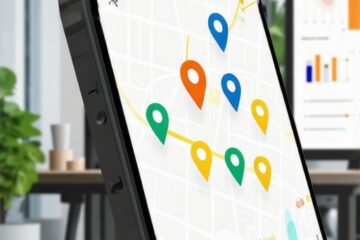
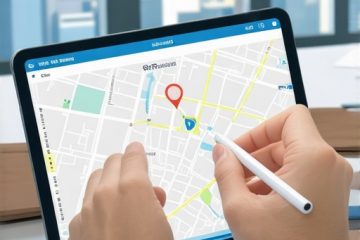
To see the truth, you must use “Grid Tracking.” Instead of one data point, grid tracking checks your position across a multi-point map – perhaps a 5×5 or 10×10 grid covering your entire service area. This reveals the “Heat Map” of your visibility. You might find you are dominant in the north but completely invisible in the south due to a competitor’s location or a physical barrier like a river or highway. Understanding proximity, relevance, and prominence as a fluid ecosystem is the only way to truly rank google business profile effectively.
[Internal Link: Why Your Map Rank Drops Significantly Once You Leave the City Center]
Why Most Automated Audits Fail
The market is flooded with automated local seo tools that promise a comprehensive audit in sixty seconds. Most of them are useless. These tools often use “headless browsers” or low-quality proxies that Google easily identifies. When Google detects an automated bot, it frequently serves “sanitized” or “cached” results that don’t reflect what a real human on a mobile device sees.
Furthermore, automated audits rarely account for “ghosted pins” or “shadowed listings.” A ghosted pin occurs when your business is technically indexed, but Google’s “filtering” algorithm hides it because it deems another listing nearby to be more relevant or authoritative. You won’t see this on a standard report; the report will simply say you aren’t ranking, without explaining that you are being filtered out due to a “More Places” conflict.
There is also the issue of “fake map data.” Real-time mobile fluctuations are constant. Factors like the time of day (is the business currently open?), the searcher’s previous search history, and even the speed of the user’s data connection can influence the Map Pack. Most gmb seo tools provide a static snapshot of a dynamic environment. If your audit tool isn’t showing you the “why” behind your lack of visibility – such as category conflicts or poor sentiment analysis – it’s just a pretty picture with no diagnostic value.
[Internal Link: Why Most SEO Audit Tools Fail to Detect These 3 Specific Map Ranking Flaws]
The Metrics That Actually Pay the Bills
If rankings are a lie, what should you be looking at? The answer lies in your Google Business Profile (GBP) Insights, but specifically the “Actions” section. Visibility is a means to an end. You can have 100,000 impressions, but if you have zero phone calls, your google business profile optimization has failed.
The metrics that actually pay the bills are:
- Direct Phone Calls: Not just clicks on the “Call” button, but actual connected conversations.
- Direction Requests: This is a high-intent signal. If someone asks for directions, they are likely coming to spend money.
- Website Clicks: Users looking for deeper validation of your services.
- Messages: Direct inquiries through the Google Business interface.
High visibility without engagement is what I call a “leaky bucket.” You might be ranking #1 for a high-volume keyword, but if your listing has a 3.2-star rating or no recent photos, searchers will skip right over you to the #2 or #3 result. In this scenario, your ranking report says you are winning, but your bank account says you are losing. You must prioritize conversion over raw position. To truly get more calls from google maps, you need to treat your profile like a landing page, not just a directory listing.
[Internal Link: How to Turn Google Business Profile Clicks Into Trackable Phone Calls]
Competitor Sabotage and Data Gaps
In the world of local search, it’s not just about what you do; it’s about what your competitors are doing to you. The “Map Pack” is a zero-sum game. For you to move up, someone else must move down. Unfortunately, this leads to “competitor sabotage.”
Unscrupulous competitors often use “suggested edits” to change your business name, move your map pin to a residential area, or mark your business as “permanently closed.” If you aren’t monitoring your listing daily, these changes can stick, causing your rankings to plummet overnight while your ranking report still shows you as “active.”
Then there are “data gaps.” Google pulls information from across the web to verify your business’s legitimacy. If your NAP (Name, Address, Phone Number) consistency is fractured – meaning your Yelp profile says one thing and your official website says another – Google loses trust in your location data. This “trust gap” acts as a ceiling on your rankings. You can hire the best google maps ranking service in the world, but if your underlying data ecosystem is a mess, you will never achieve sustained success.
[Internal Link: How to Tell if a Competitor is Forcing Your Map Pin Out of Local Search]
Conclusion & 2026 Roadmap
As we head toward 2026, the landscape of local SEO is shifting from “keyword matching” to “entity validation.” Google is getting smarter at identifying which businesses are real, local, and trusted. Rankings will continue to be a secondary metric – a symptom of a healthy profile rather than the goal itself.
Stop obsessing over a single number on a PDF. Instead, perform a manual “Maps Performance Check.” Look at your grid visibility, audit your conversion metrics, and keep a hawk-like eye on competitor edits. If your current strategy is focused solely on “getting to #1,” you are building your house on sand. You need a holistic approach that combines technical optimization with real-world engagement.
Don’t let vanity metrics dictate your marketing budget. If you want to see the real story behind your map performance and uncover the hidden flaws that are costing you leads, visit SEO Viper Tools. Use their advanced local seo ranking tools to get the data that actually matters for your bottom line.
[Internal Link: Preparing for the 2026 Local SEO Trends: Moving Beyond Basic Keywords]